Built to Belong: How Nature & Community Shape Gulf Coast Architecture
From Alys Beach to Ocean Springs, discover how coastal communities are built to weather storms and bring people together.
By Lauren Sage Reinlie
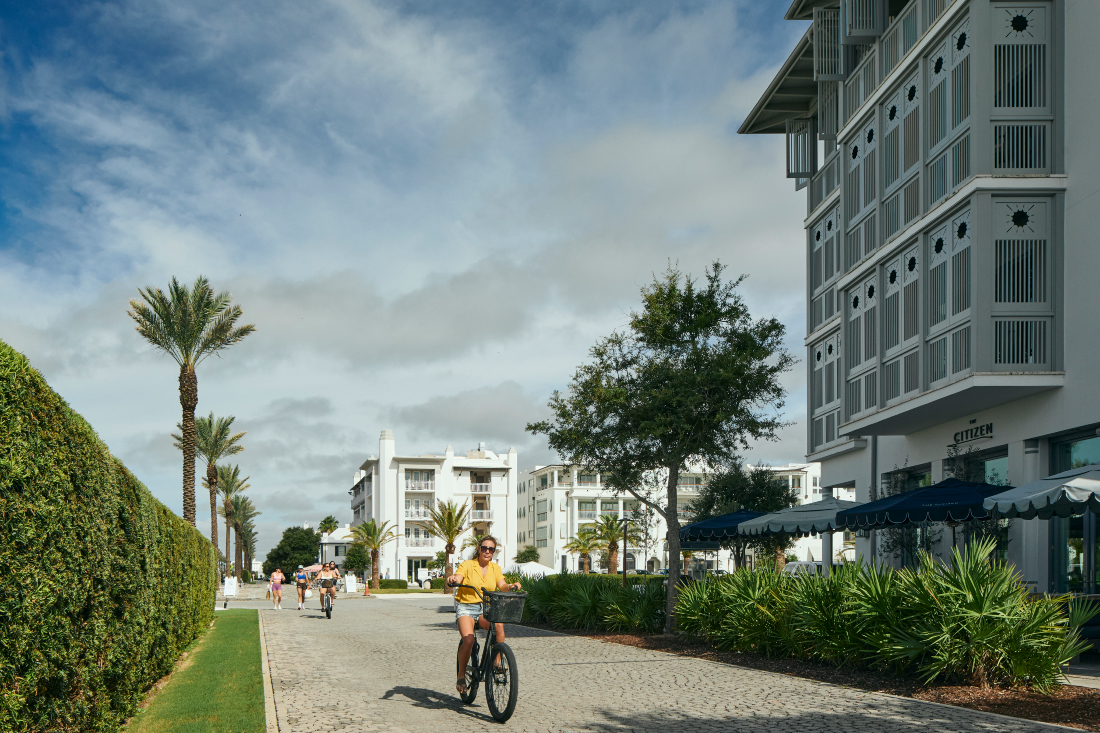
240501-alys-seq-Photo credit: Kurt Lischka Moon Creek Studio
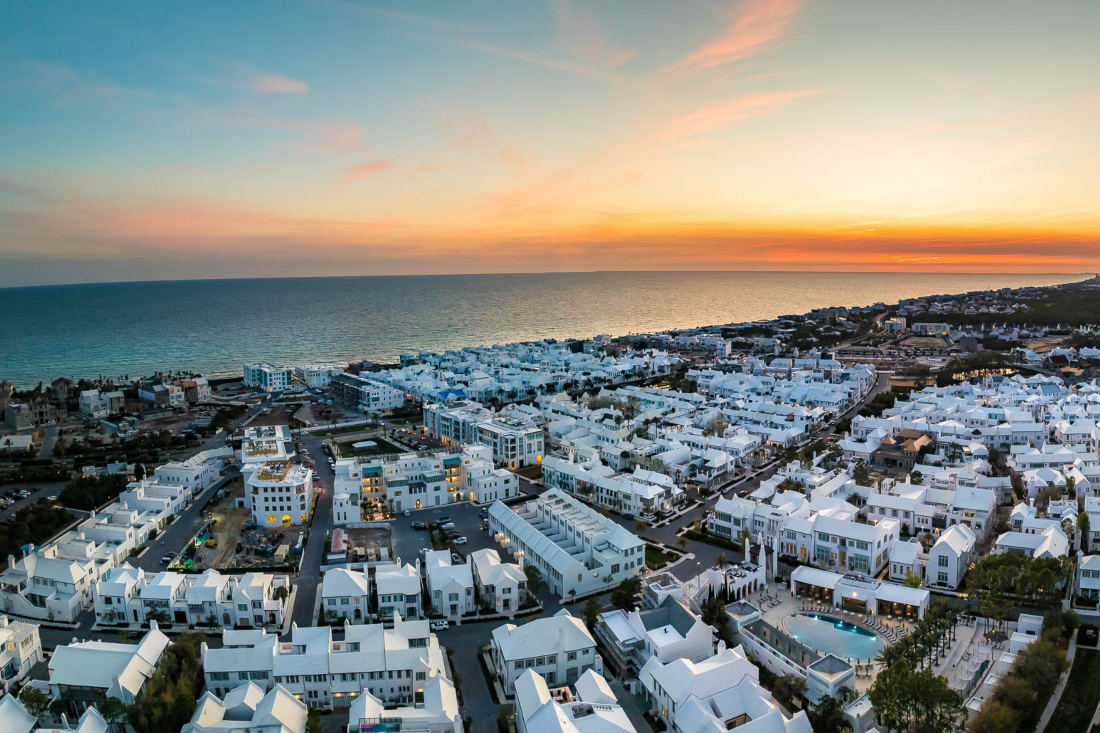
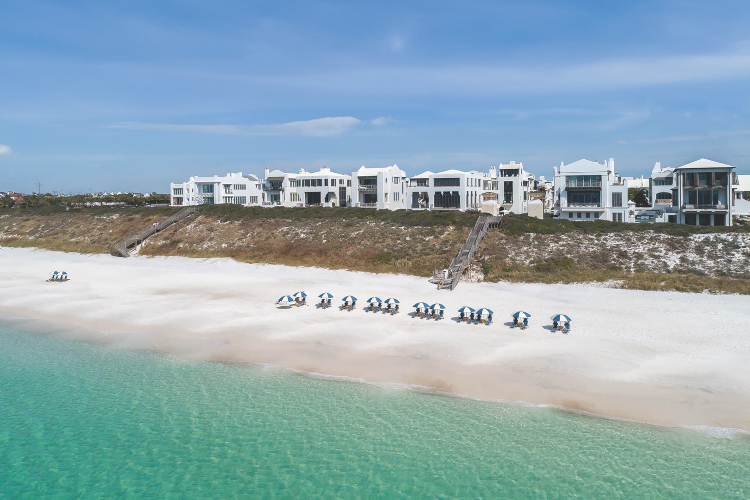
When town architects Marieanne Khoury-Vogt and her husband, Erik Vogt, first visited the site along Northwest Florida’s Gulf Coast that would become Alys Beach, the blue-green Gulf shimmered alongside white dunes covered with sea oats. The land rose 30 feet from the shore and stretched back to pristine coastal wetlands. Except for a quiet two-lane road, it was empty.
“We were completely taken away,” Khoury-Vogt said of the property that would become their life’s work. But the heat, humidity, salt air, wind, and hurricanes gave them pause until Erik’s brother sealed the deal with a single reason: “The sunsets. The sunsets are magical.”
More than two decades later, Alys Beach is edging closer to completion, its intricate and radical vision largely realized.
“Alys shows people how architecture creates walkability, community, and intimacy and how shade, shelter, durability, and resilience can be woven into the fabric of the town,” Khoury-Vogt said. “Those ideas are not separate, but part of the overall design philosophy.”
That balance between resilience and a strong sense of place plays out in different ways along the Gulf Coast, from meticulously planned communities to those shaped over generations.
Built for the Gulf
In the early 2000s, the Stephens family set out to turn its 158-acre Gulf-front property into Alys Beach, a visually distinctive town with a deep sense of place, designed for coastal conditions.
“Alys has a design in which resilience and beauty reinforce one another,” Khoury-Vogt said.
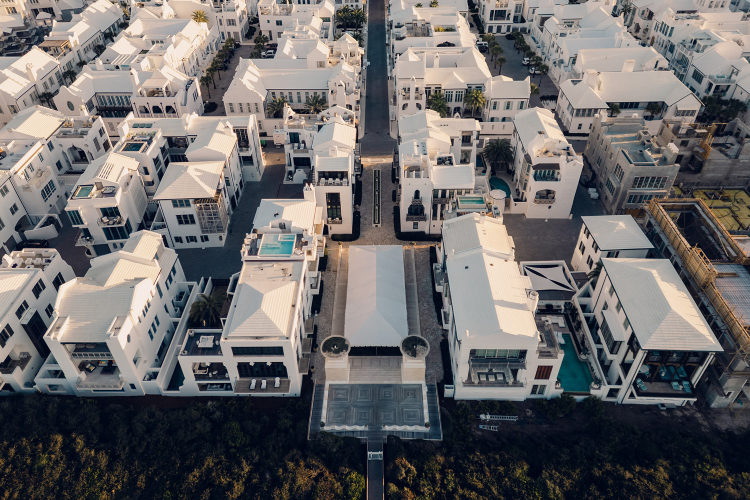
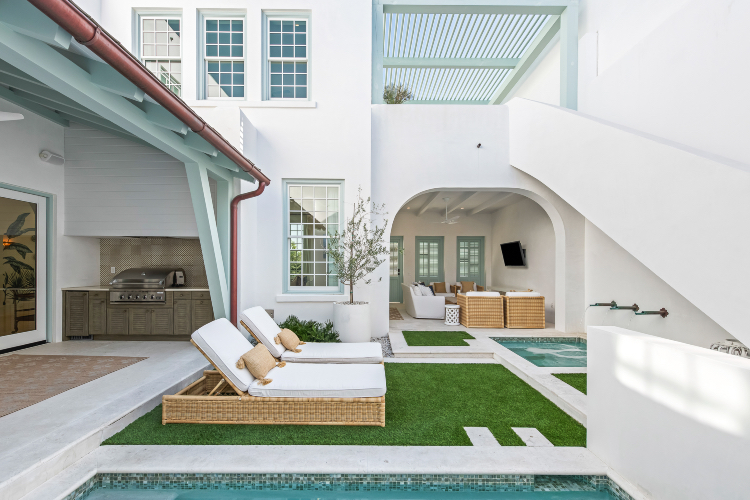
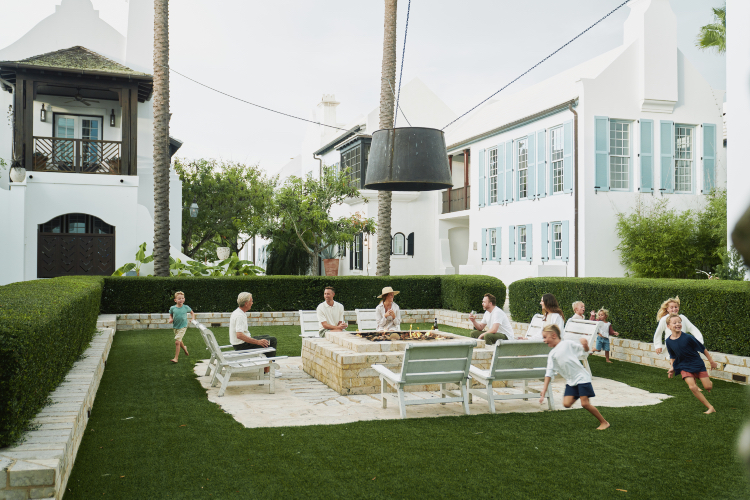
Alys Beach’s structures rise in stunning white masonry against the backdrop of the Gulf. The town’s design, which incorporates courtyards, pedestrian paths, and intentional community spaces interspersed with the homes, was originally inspired by Antigua, Guatemala, and Bermuda, but has since expanded to take in Roman, Greek, and Moorish influences. The white towers, known as butteries, lining Scenic Highway 30A have become iconic, but the details seem endless. Each architect, Khoury-Vogt said, is encouraged to give what she calls a gift to the street: a fountain, a chimney, stoops, or planters. “It makes for a very visually interesting walk.”
Much of what makes Alys Beach beautiful is actually doing more than one job. “We’re designing and building to withstand the realities of living on the coast,” Khoury-Vogt said.
Every structure at Alys Beach must meet the FORTIFIED for Safer Living standard, designed to strengthen buildings against severe weather and reduce wind damage through a continuous structural system connecting the foundation, walls, and roof. Reinforced masonry played a major role in helping Alys meet those requirements.
Khoury-Vogt said she and her husband realized immediately what a privilege it was to build in masonry, given the expense. “In hindsight, though, it is the correct way to build along the coast,” she said, because it helps avoid an endless cycle of hurricane damage and rebuilding. “In some ways, it’s the most sustainable thing you can do.”
In addition to the masonry, shallow eaves, impact-resistant openings, and breezy courtyards provide wind protection, comfort from the heat, and architectural identity.
At the town scale, the same principle applies: main streets run perpendicular to the Gulf, preserving views of the beach and drawing cooling breezes into the community. The landscape is equally functional: interconnected green spaces, wetlands, and permeable street surfaces absorb and channel stormwater while adding beauty.
At the same time, Alys Beach deliberately built something less tangible: a community.
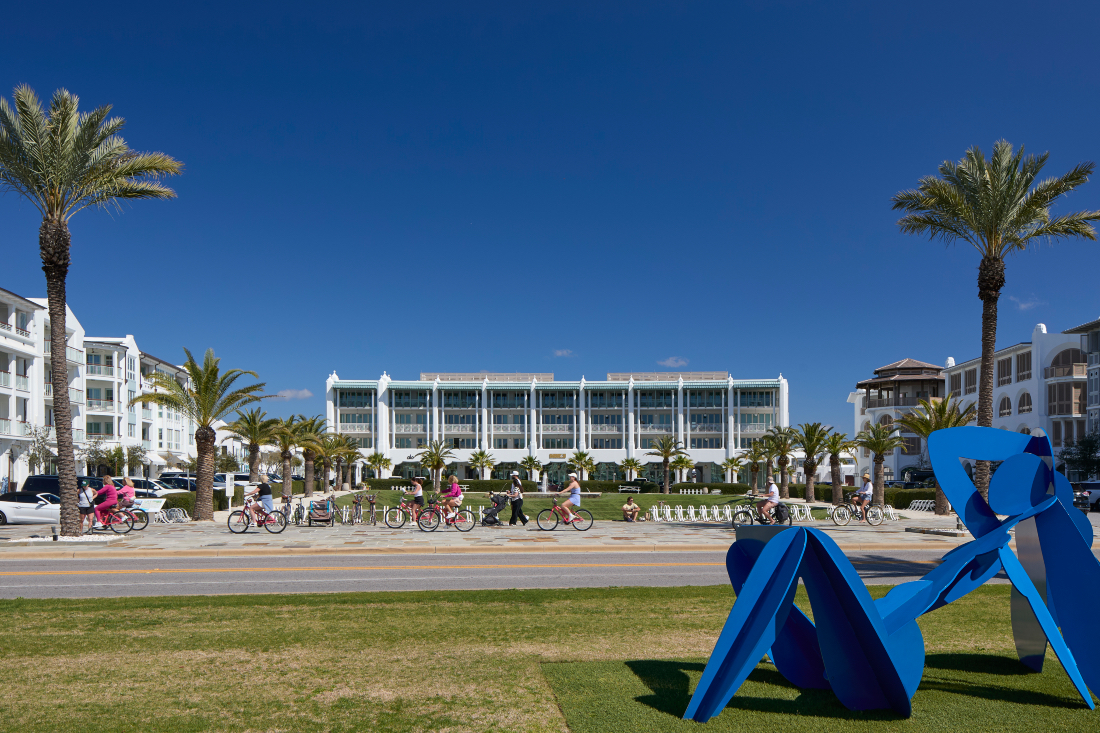
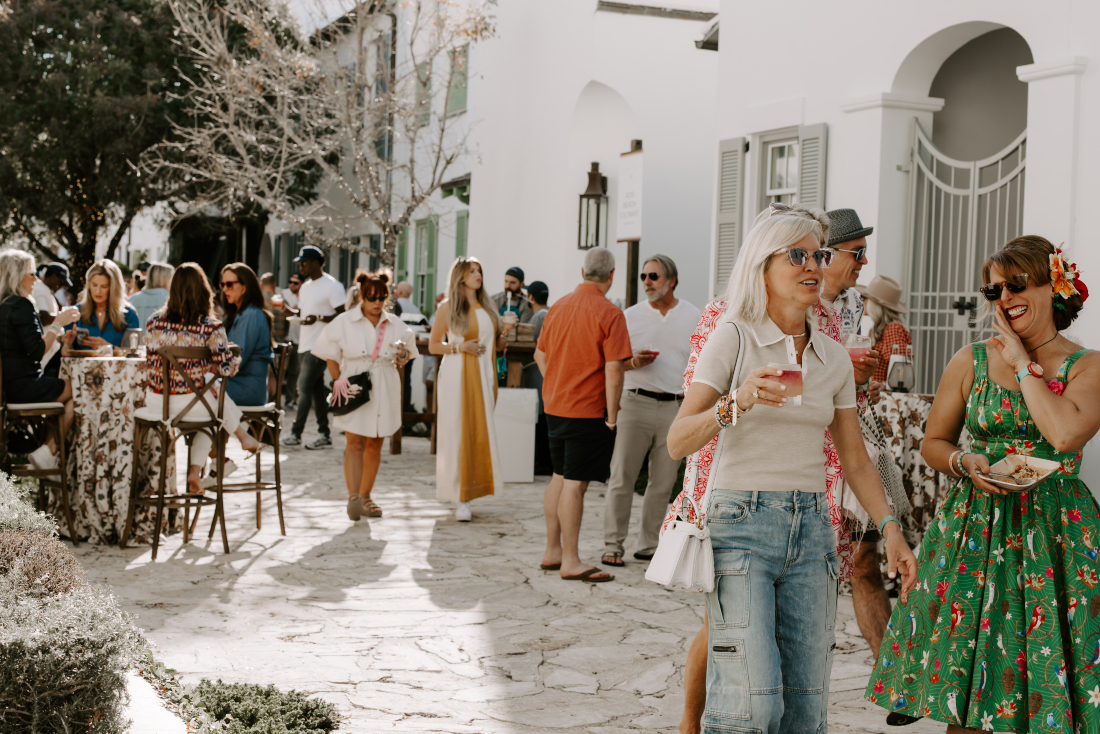
Every home connects to a street or pedestrian path, and those paths lead to greens, parks, and civic spaces. These shared spaces create encounters and have given Alys Beach “an incredible vitality,” Khoury-Vogt said. Over two decades, a development became a town.
Khoury-Vogt and Vogt became Alys Beach’s first full-time residents, moving into their home in 2006, raising their daughters there, and still living in the same house today. Their years as both residents and town architects have given them an unusually intimate perspective on how Alys has grown.
By the time Alys Beach began taking shape, the idea that architecture and town planning could foster this type of community life was no longer an experiment on this stretch of Northwest Florida’s Gulf Coast. A few miles away, Seaside had spent decades demonstrating what could happen when streets, homes, and public spaces were designed around people rather than cars.
The Idea Travels West
Seaside’s success helped spread New Urbanism to neighboring communities along Scenic Highway 30A and drew students from around the world, including urban designer Mark Schnell, who became fascinated with the concept in college. He and his wife moved to the area in 2004, where he could watch the communities fill with people and see the ideas at work.
In 2006, developer Jeff Lamkin approached Schnell about taking the principles of New Urbanism west to the Texas Gulf Coast, where the concept still had little precedent. Together, they launched Cinnamon Shore on a 60-acre property on Mustang Island. The property sidles up to Port Aransas, a salty, old-school fishing town Texans had been visiting for generations.
Twenty years later, Cinnamon Shore has grown to about 200 acres, with the potential to add 600 more, and has become a beloved and bustling destination for Texans from across the state.
“We set out to create a walkable, mixed-use community that’s really lovable,” said Schnell, who has been the town’s urban designer since the beginning.
The houses are designed to open up to the street. Alleys move parking and trash to the back, “where they belong,” Schnell said, allowing porches, front doors, and windows to shape the streetscape. Even homes with front-facing parking must stay visually connected to the street. “This is all an effort to make people the priority over cars and create a great streetscape,” he said.
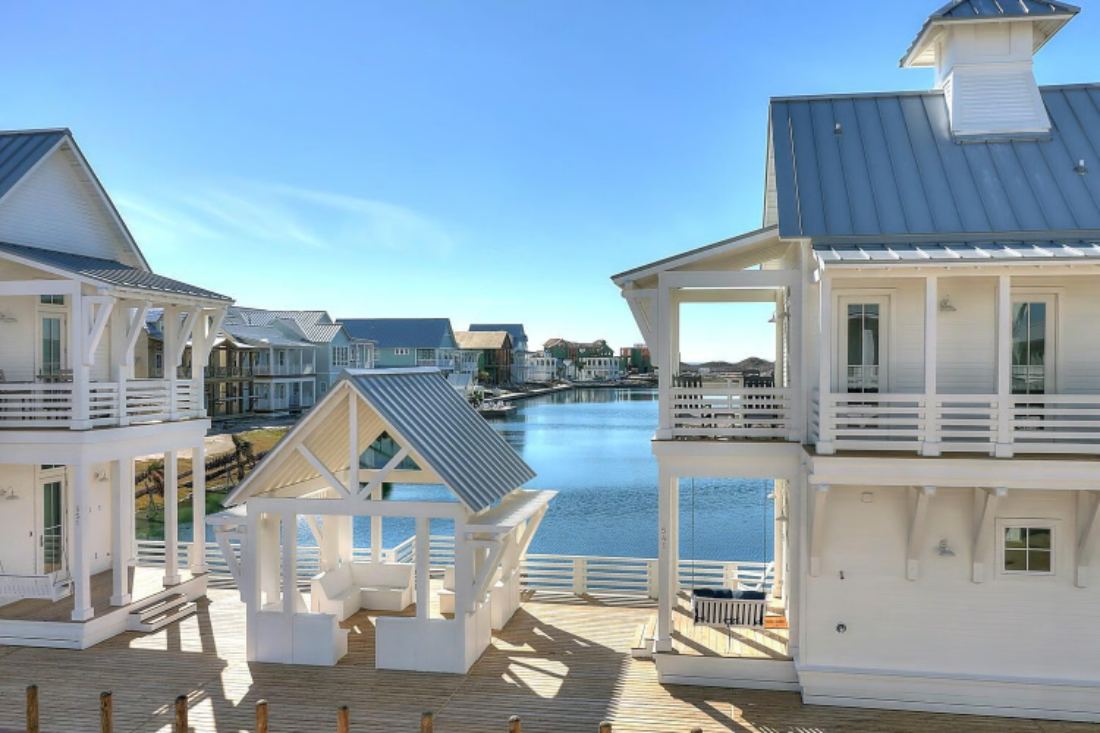
Schnell has also tried to keep the community’s water features connected to the public realm. At Cinnamon Shore South, for example, the edges of the lakes are lined with public boardwalks and pavilions rather than reserved for the private backyards of waterfront homes, drawing people to the water and creating more opportunities for connection.
Unlike Alys Beach, Cinnamon Shore draws on a more familiar architecture. Homes are typically clad in fiber-cement board that looks like wood, in the tradition of historical Gulf Coast homes. They have big porches, shaded windows, and openings to catch breezes and are elevated only about two feet to maintain their connection to the street. Before construction began, the developer also raised the property with sand. Schnell said those measures helped protect many homes during Hurricane Harvey in 2017.
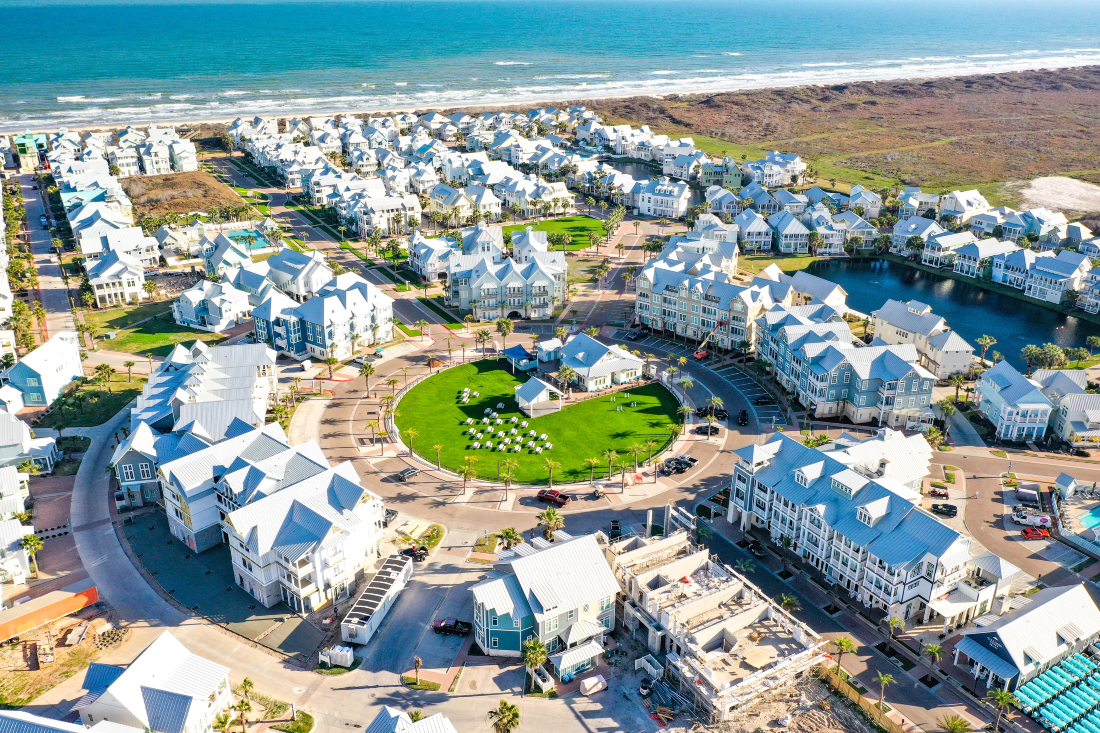
The community was designed as a symbolic journey to the beach, with the master plan organized around connecting people to the water. Grand Boulevard, a wide central street lined with some of the community’s most important spaces, leads toward the dune crossover visible in the distance and, beyond it, the beach.
The beaches around Port Aransas are drivable in designated areas, so golf carts are a big part of the experience, something Schnell had to adjust for over the years by adding more parking and golf cart access than he had originally anticipated.
The Town Center has a large public space that can accommodate a crowd, with a music stage, restaurants, shops, and higher-density condos nearby. On a busy evening, people spill out of the restaurants into the Town Center, kids run around, and someone plays music on the stage. In moments like these, Schnell feels like it all worked.
“People find ways to connect with each other and with the place,” Schnell said. “It’s so powerful to see.”
Yet such communities remain incredibly rare, he said, because they require years, risk, investment, and persistence. “I wish I could build 50 more of these. People love it.”
Three Centuries In
More than 600 miles east of Port Aransas, Ocean Springs, Mississippi, offers a different model. Unlike the young, meticulously planned communities of Alys Beach and Cinnamon Shore, Ocean Springs took shape over more than 300 years, evolving from a seaside resort into a thriving, walkable arts community.
“Our sense of place has evolved organically over many generations,” said Cynthia Sutton, president and CEO of the Ocean Springs Chamber of Commerce-Main Street-Tourism Bureau.
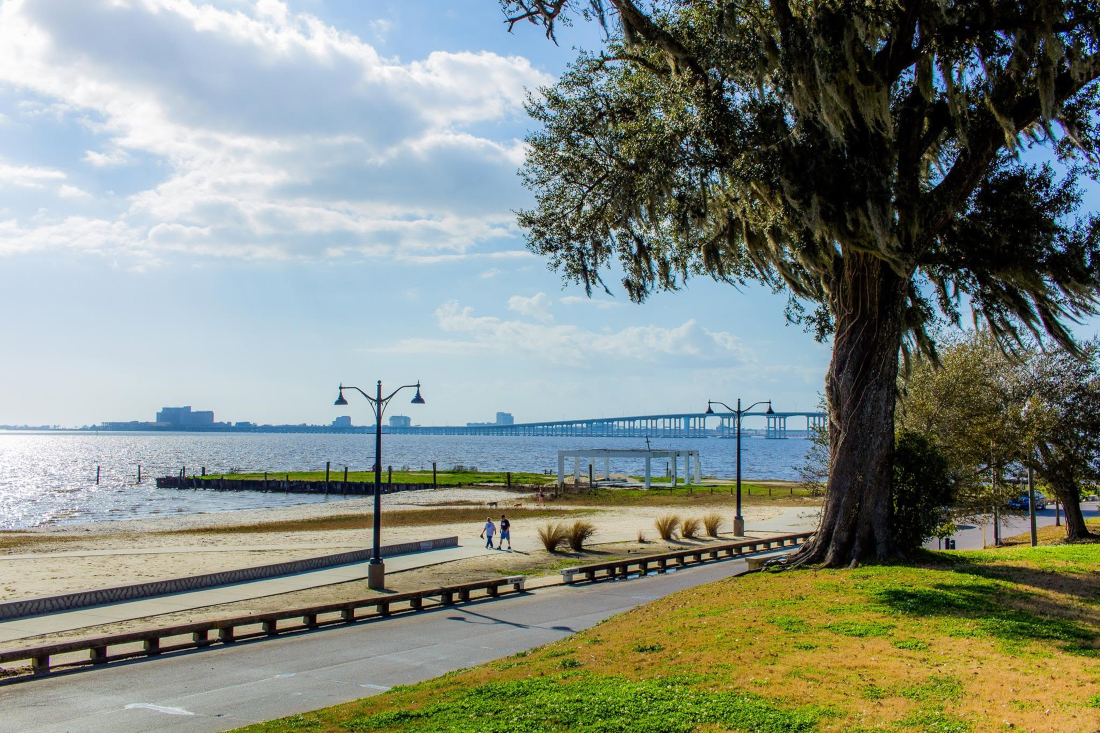
Downtown buildings sit close to wide sidewalks. Old live oaks draped with Spanish moss create a canopy of shade. Shops line the main downtown streets, with homes just a block away on either side. The city accommodated traffic by changing the parking pattern rather than widening the historic street.
Many New Urbanist principles are alive and well in Ocean Springs, but they developed naturally over time and have been carefully protected by those who value the city’s character.
Historic buildings stand alongside new homes rooted in local architectural traditions, said Beau LeBatard, a partner and architect at LeBatard Architecture in downtown Ocean Springs. “We call it responding to your surroundings,” he said. “Some of it has been established over hundreds of years of figuring out what works.”
For the Gulf Coast, that means responding to the familiar elements of heat, humidity, and hurricanes, he said. Houses have deep porches for shade and are slightly raised for ventilation and protection from flooding. Vertical windows and simple rooflines connect new homes to the architecture of the past. “We try to design homes that feel new; they’re unique, but they also have a familiarity about them.”
Together, those features give Ocean Springs a sense of place. These are not houses that could be built just anywhere; they are distinctly Gulf Coast
What Makes a Place Last
Storm protection, however, can complicate efforts to preserve architectural identity. Hurricane Katrina largely spared historic downtown from wholesale rebuilding because of the area’s relatively high ground but devastated the low-lying waterfront. There, required flood elevations can raise new houses far above the ground, disrupting traditional design. Larger or additional columns can soften that effect, LeBatard said, but limited time and resources can leave houses looking as if they are perched on stilts.
Schnell observed similar challenges elsewhere along Mississippi’s coast. “It’s made it really tough to rebuild in the way that people loved before,” he said.
What developed organically now requires deliberate protection. For Sutton’s organization, that means treating downtown not simply as a historic place to preserve but as an “economic engine and a living, working part of our community,” she said.
The best Gulf Coast architecture responds to both the Gulf’s beauty and its volatility while also creating connection and community. “When people feel connected to a place and invested in it, they have a reason to protect it and continue building on it,” Sutton said.
A place built to withstand the elements may still not last without the people who care for it.
For more coastal stories, read the latest issue or subscribe at BeachHappyMag.com.
Lauren Sage Reinlie is an award-winning freelance journalist currently living in Freeport, Florida. Her work has taken her across the South, where she has covered topics ranging from the wily ways of politicians at the Texas state capitol to the storied land of sunshine and swamp sharks (a.k.a. gators) in Florida. She can be reached at lauren.sage.edwards@gmail.com.




 Hey30A AI


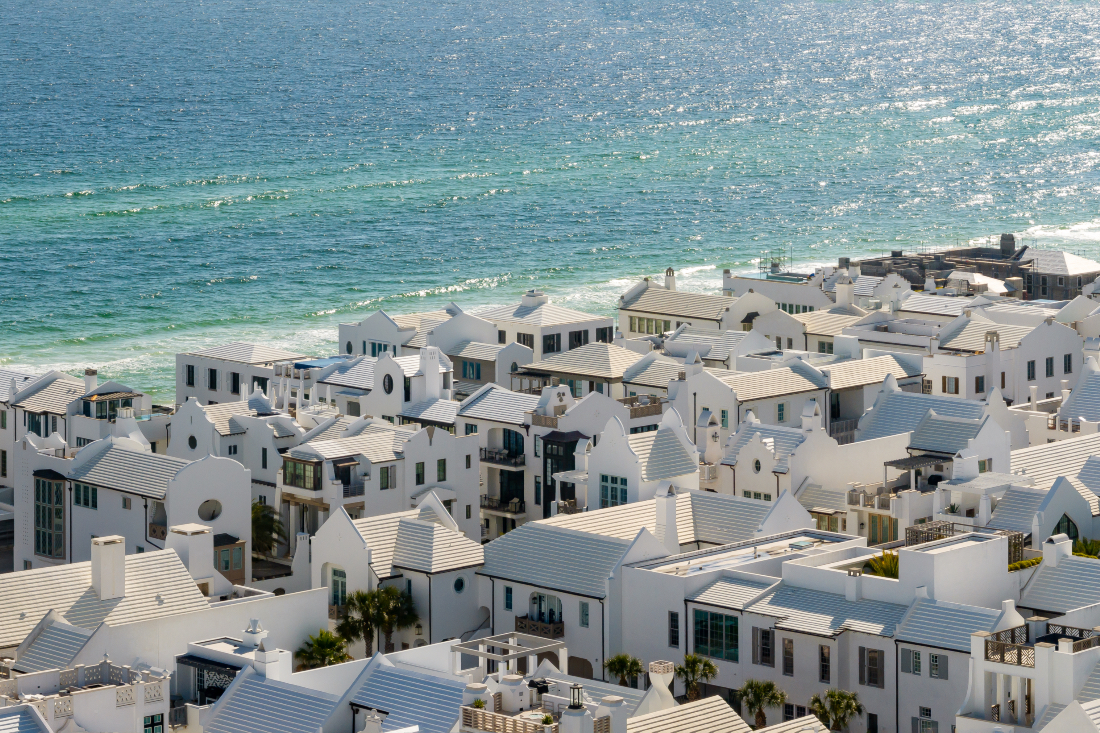 240501-alys-seq-Photo credit: Kurt Lischka Moon Creek Studio