Hey30A AI


Trending Now
Inland Blue: The Freshwater Springs of Northwest Florida
Beyond the Gulf beaches, shaded creeks lead to cool, clear swimming holes.



Sign up for beach news and local updates—plus a chance to win a $500 30A gift basket. One winner each month!
Beyond the Gulf beaches, shaded creeks lead to cool, clear swimming holes.
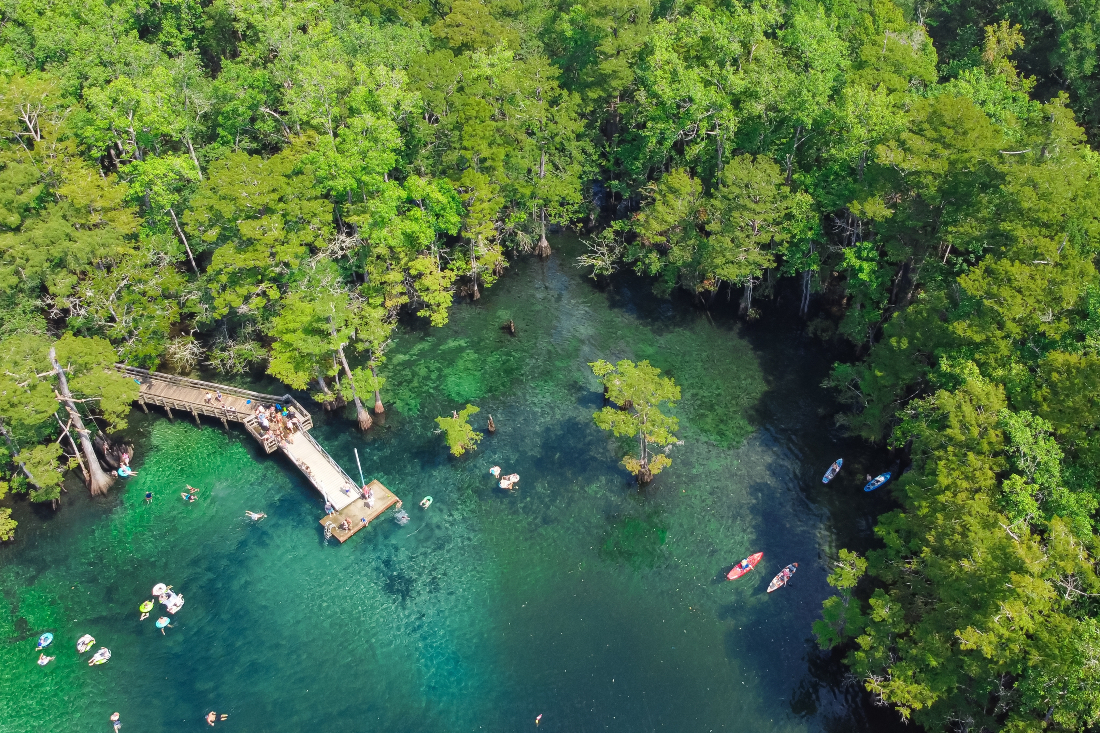
There’s another Florida just beyond the one most visitors come to see, one that reveals itself as the coastline fades and the scenery takes on a different character.
Leave the sugar-white sand and emerald Gulf behind, point the car inland, and the landscape begins to change. Beach houses give way to pine forest. Traffic thins. Eventually, pavement surrenders to a creek launch, where a kayak becomes the better mode of transportation. Follow the water long enough, and the reward can appear almost impossibly bright: a pool of clear blue rising from the limestone beneath Northwest Florida.
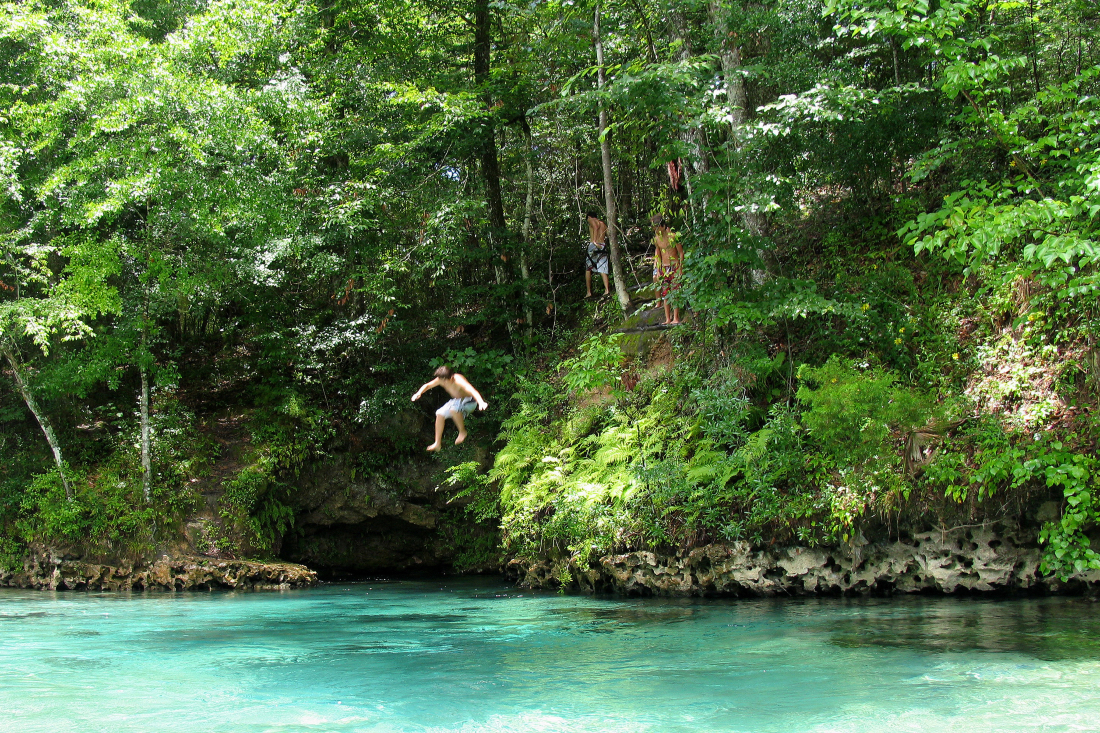
For travelers accustomed to measuring a Panhandle vacation by beach access, Florida’s freshwater springs offer a different version of paradise. The water is cooler. The canopy closes in overhead. The soundtrack shifts from crashing surf and skimboarders to paddles breaking the surface and adventure seekers jumping from rope swings.
And there are far more of these places than most visitors realize.
“There’s more than 250 springs in the Northwest Florida Panhandle region,” said Benjamin Faure, who works in recreation and resource management with the Northwest Florida Water Management District. “They can be anywhere from a small karst vent that seeps out water into a creek to a first or second magnitude spring.”
Faure began his career as a Florida State Parks ranger four decades ago, eventually becoming assistant district manager overseeing 37 state parks in Northwest Florida before moving into his current role with the Water Management District.
Doug Alderson brings a different, equally expansive perspective. A longtime Florida writer, photographer and outdoorsman, Alderson spent about 15 years with the Florida Office of Greenways and Trails coordinating kayak and canoe trails. He later spent several years as outreach and advocacy director for Apalachicola Riverkeeper and has been involved with the organization in some capacity since 2010. He has written 18 books, many focused on Florida’s outdoors.
After decades exploring rivers and springs across Florida, including better-known systems elsewhere in the state, Alderson still finds something distinctive in the Panhandle.
“When I go to Cypress Springs along Holmes Creek, it’s amazing the clarity of that spring,” he said.
For anyone curious enough to explore beyond the beach, there is no shortage of places to experience it firsthand.</span
Econfina Creek is one of the best places to begin. The 22-mile waterway changes dramatically as it flows, moving quickly through limestone terrain in its upper reaches before slowing past springs and thick vegetation. A University of Florida Institute of Food and Agricultural Sciences Extension article described Northwest Florida as the state’s “Canoe Capitol,” singling out Econfina as one of the region’s more distinctive paddles.
The attraction isn’t a singular spring at the end of the journey. Pitt Spring, Williford Spring, Sylvan Spring and Econfina Blue Spring are found along and near the creek, allowing a day on Econfina to unfold as a series of discoveries.
Alderson knows that experience well. On a recent outing with friends, he spent the day traveling seven or eight miles by kayak, with hours of swimming mixed in.
“It’s a great way to spend a day,” he said.
Another kind of spring adventure waits along Holmes Creek.
Here, Cypress Spring makes visitors work a little harder for the payoff. There is no parking lot beside the water and no short walk to the swimming hole. Visitors paddle or float along Holmes Creek until the surrounding water suddenly takes on the brilliant clarity Alderson remembers so well.
That sense of arrival is part of what makes Cypress memorable. It can feel like discovering a swimming hole hidden from the road, even if plenty of other people have made the same discovery.
Its relative remoteness has not kept the secret particularly… secret.
“Even at Cypress Springs, where it’s boat-in only, there are hundreds of people surrounding that spring,” Faure said of busy summer days. “There are a couple of tours and kayak companies that will even cater to the folks down in the Panama City Beach area and they shuttle them up.”
Once there, the view changes completely when you look below.
With goggles on, the spring reveals a quieter world. Fish move through the current as vegetation sways, and the sandy floor can suddenly give way to a limestone vent hinting at the vast groundwater system beneath.
“If you’ve got a snorkel, what’s really cool about the springs and the spring runs is that you see all the fish,” Faure said. “The largemouth bass, sunfish, the mullet. I think they’re probably the most comical to watch in the spring runs because they’ll dart around throughout the springs and the eelgrass.”
Then the longtime land manager gives way to the guy who simply loves being in the water.
“It’s probably my favorite activity to do: put on a snorkel and just watch it all,” he said.
“You just feel like you’re in a surreal environment when you’re immersed in that.”
Morrison Springs offers another variation, this time in Walton County. Rather than requiring a paddle, Morrison is easily accessible and draws swimmers and divers to a spring pool roughly 250 feet across.
The scale becomes even more impressive below the surface. Three cavities descend beneath the pool, including one reaching approximately 300 feet. What appears from shore to be an inviting place for a swim is also a window into a much larger world underground.
Taken together, Econfina, Cypress and Morrison reveal what a map of Northwest Florida doesn’t immediately show. These are not isolated blue swimming holes, but visible pieces of much larger water systems. Spring runs feed creeks and broader watersheds; Econfina Creek, for example, flows into Deer Point Lake, a reservoir that releases freshwater into North Bay and the larger St. Andrew Bay system.
Through his years with Apalachicola Riverkeeper, Alderson came to understand the same principle on a larger scale: what happens upstream can matter far downstream.
Those connected waterways also create corridors for wildlife. River otters work the spring runs while turtles sun along the banks. Anhingas and great blue herons are common sights, with osprey hunting farther downstream. Alligators and snakes are here too, though Faure said they tend to keep their distance from the busiest swimming areas.
Faure described the springs as places that rarely sit idle.
“The springs are busy all the time, with the local wildlife visiting and utilizing them at night, and then giving way during the daytime to the locals and tourists enjoying them,” he said.
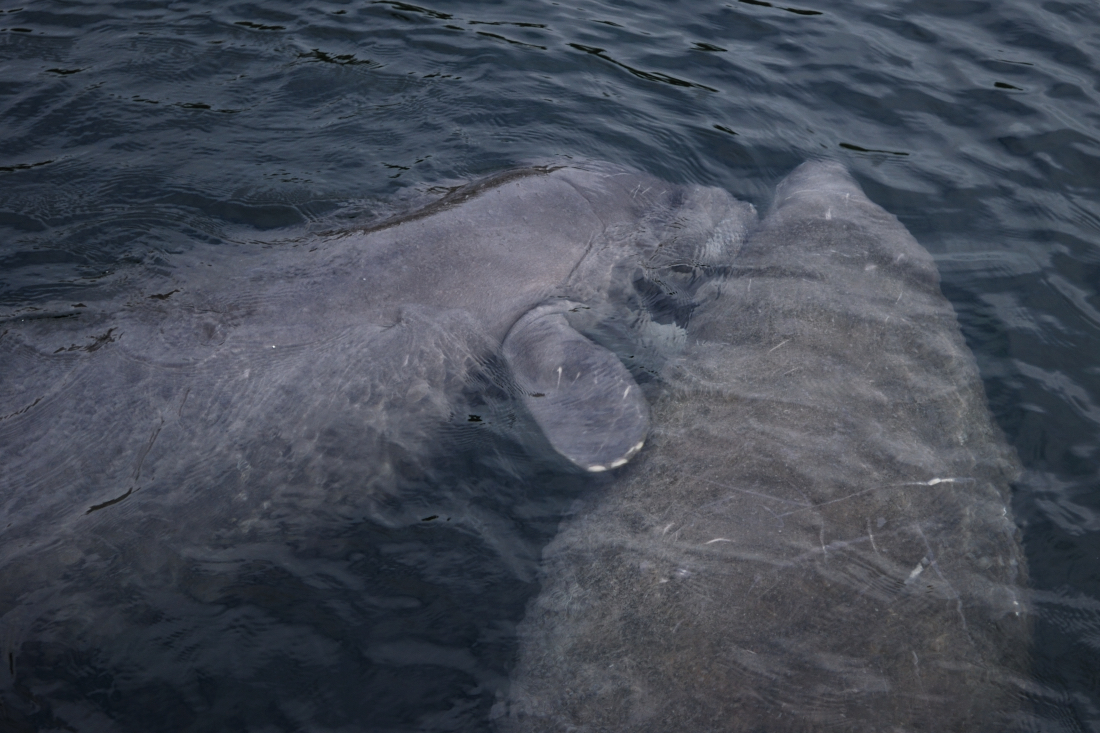
Occasionally, that wildlife includes a particularly memorable visitor: a manatee.
Faure said he recently encountered two resting at Edward Ball Wakulla Springs State Park. While manatees are more closely associated with spring systems elsewhere in Florida, they do venture into North Florida waters and use the stable temperatures of springs as a refuge when winter waters turn cold.
For the best chance at seeing wildlife, Faure recommended exploring during the quieter edges of the day. Alderson agreed with the early start, particularly if avoiding crowds is the goal.
“If you’re visiting, you’re on vacation, yeah, go during the week,” Alderson said. “Go early in the morning and beat the crowds.”
For beachgoers accustomed to spending an entire vacation facing the Gulf, that may be the real appeal of the springs. They don’t compete with the coast. They reveal another side of Northwest Florida, often within easy driving distance of the coast.
The beaches announce themselves from the moment you arrive. The Gulf stretches to the horizon, impossible to miss.
The springs ask a little more of you.
Follow a creek. Slip beneath the trees. Paddle around one more bend.
Then the water changes color.
And just like that, the Florida vacation you thought was about one spectacular shade of blue becomes a search for another.
Northwest Florida has hundreds of springs, but the experience can vary considerably depending on where you go. Some make for an easy swimming destination. Others make getting there part of the adventure.
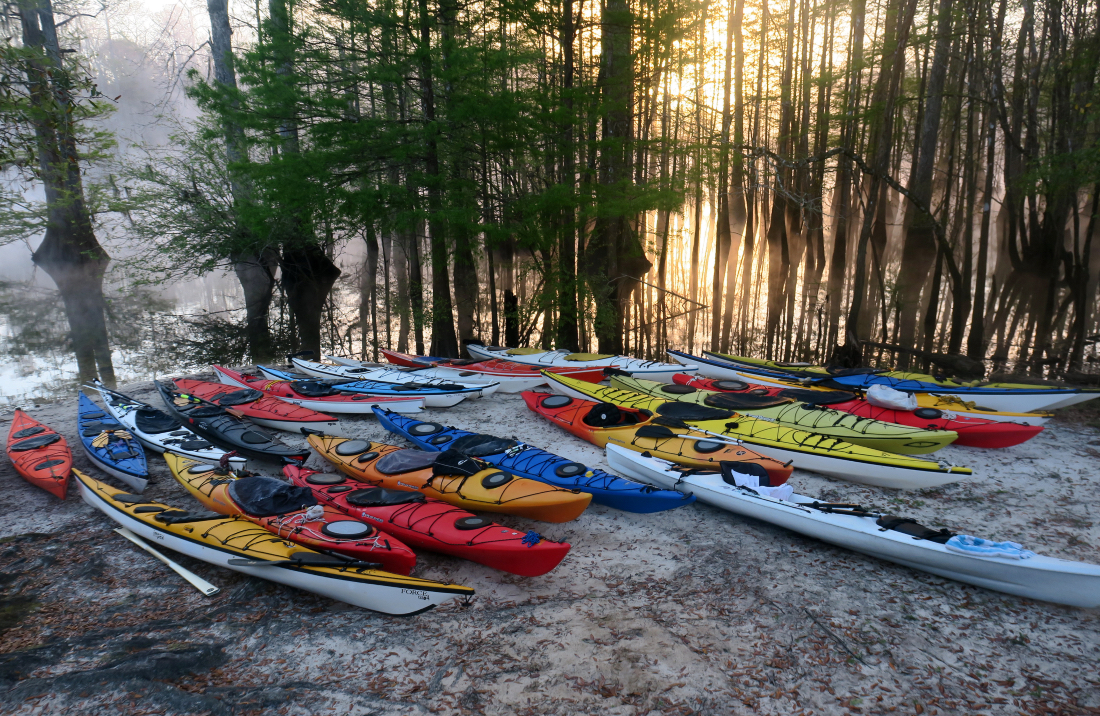
For travelers who want to combine paddling with plenty of time in the water, Econfina is hard to beat. Pitt Spring, Williford Spring, Sylvan Spring and Econfina Blue Spring are among the springs in the area. Outfitters serve the creek, so bringing your own kayak or canoe isn’t necessary.
Cypress rewards a little effort. There is no parking lot at the spring, so visitors arrive by water along Holmes Creek. Kayak outfitters make it accessible even for travelers without their own equipment, and Alderson said the clarity at Cypress can be remarkable. Summer crowds can be significant, so an early start is worth considering.
Morrison is a practical choice for visitors who want a major spring experience without committing to a longer paddle. The recreation area offers easy access, and its large spring pool draws swimmers and divers.
Pitt works particularly well as part of a larger day on Econfina Creek. Rather than treating it as the sole destination, build it into a paddle that lets you experience more of the surrounding spring system.
Another stop within the Econfina system, Williford can break up a day on the creek with time out of the kayak and in the water. Pairing several spring stops creates a different experience from choosing one destination and staying there all day.
The best advice? Beat the crowds.
Alderson recommended visiting during the week whenever a vacation schedule allows. Otherwise, go early. Faure also favored the edges of the day, when fewer visitors can mean better opportunities to spot wildlife along the spring runs.
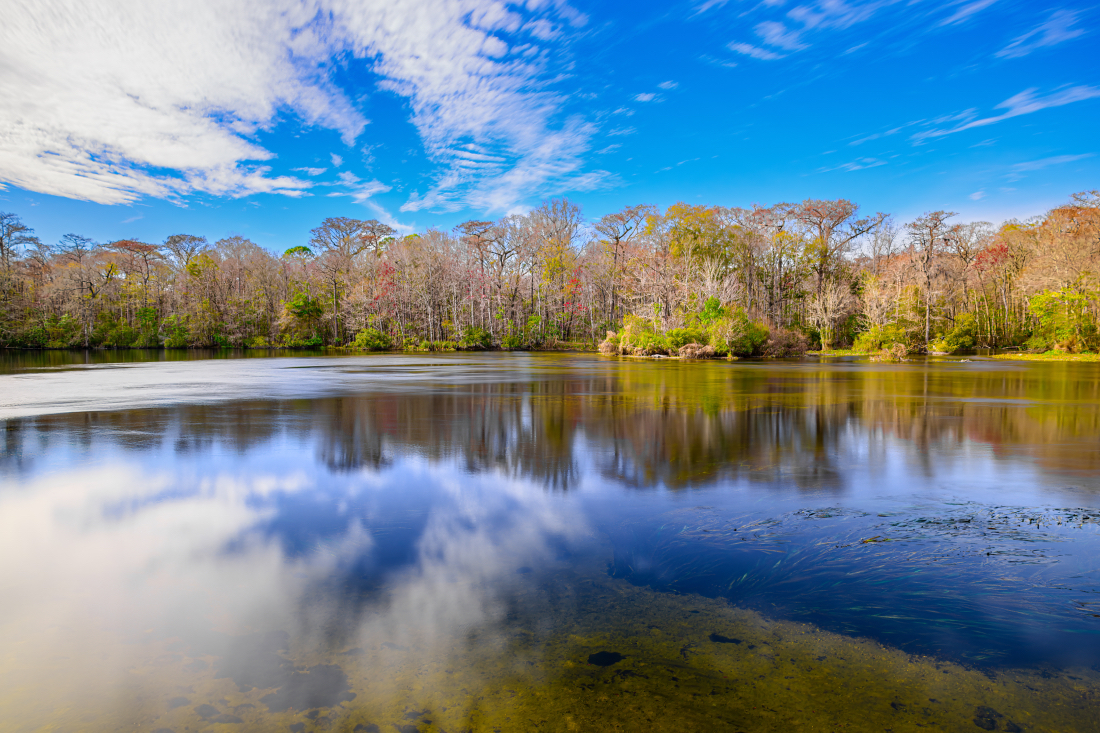
More people are discovering Northwest Florida’s springs, and both Faure and Alderson agreed that enjoying them comes with a responsibility to leave them in good shape for whoever arrives next.
“Because they’re loved so much by the public, they can sometimes be overloved,” Faure said.
Alderson put it even more plainly: popular spring runs can be “loved to death.”
Fortunately, protecting them doesn’t mean enjoying them less.
Stay within designated areas and avoid repeatedly walking across sensitive shorelines. When swimming or snorkeling, keep off submerged vegetation. Some springs do not allow visitors to land along their banks, so know the rules before getting out of a kayak or canoe.
Whatever comes with you should leave with you.
Alderson recommended going one step further.
“Take out more than you produce,” he said.
If a discarded bottle or can appears along the way, pick it up and carry it out with your own things.
There is also a larger reason to take care of these places. The water emerging from the springs is connected to the same broader system that communities rely upon.
“We need to protect the water quality of the springs because that is our drinking water as well,” Alderson said. “It’s the same aquifer where it comes from.”
For both men, the message isn’t to stay away. Go paddle. Jump in. See for yourself why these places inspire so much affection.
Then leave the spring ready to inspire whoever arrives next. The next visitor. The next generation. Generations to come.