For a lot of 30A homeowners, the story starts the same way. They rent a house in Rosemary Beach or Seagrove for a week, fall for the emerald water and the slower pace, and drive home wondering whether owning a place here could help pay for itself.
Allison Freeman hears that question often. A 30A realtor with Christie’s International Real Estate Emerald Coast, Freeman sees this market from two sides: as an agent who helps investors buy, and as a short-term rental owner herself, familiar with the insurance bills, cleaning schedules, and guest messages that come with it.
“Most of the investors I work with started out as guests,” Freeman said. “They already understand why people love it here. What they need is help figuring out which homes will actually perform, and which ones only look good in photos.”
Following our earlier guides to buying a home on 30A and selling a home on 30A, we asked Freeman to walk through the investor’s side of the market: why 30A works as a vacation rental destination, how to evaluate a property, and why local knowledge matters as much as the house itself.
Why 30A Draws Short-Term Rental Investors
Scenic Highway 30A follows Florida’s Gulf Coast between Destin and Panama City Beach, linking beach towns from Dune Allen and Grayton Beach in the west to Rosemary Beach and Inlet Beach in the east. Visitors come for the sugar-white sand, the coastal dune lakes, and towns where you can walk to dinner and the beach from the same front door.
What investors notice first is how loyal those visitors are.
“30A isn’t a place people visit once and cross off a list,” Freeman said. “Guests come back year after year, often to the same town and sometimes to the very same house. That repeat demand is really what an investor is buying into.”
The calendar helps, too. Summer gets the most attention, but fall and spring bring festivals, concerts, and food and wine events along 30A. Add the holidays and longer winter stays, and a well-run vacation rental has more than one season to earn, although occupancy and income can vary.
What a “Lifestyle Investment” Means
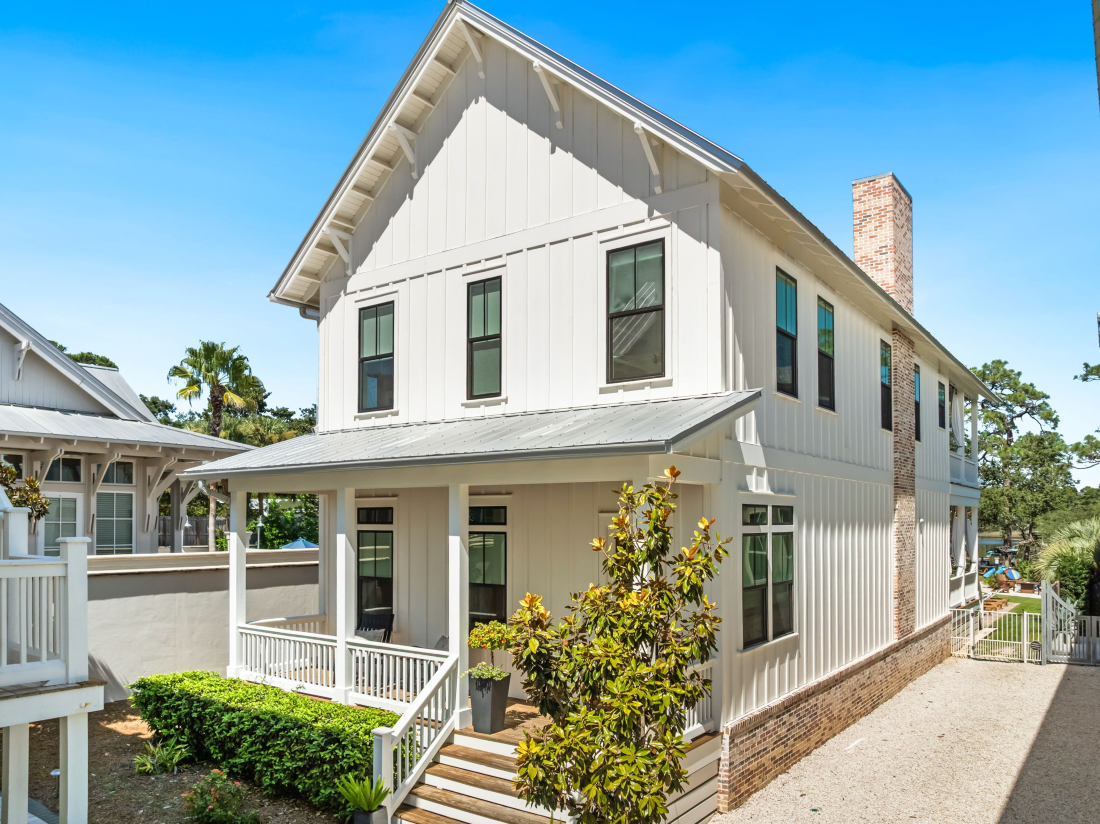
Spend any time talking real estate on 30A, and you’ll often hear a home here called a “lifestyle investment.” Rental income helps cover the cost of ownership, but it’s only part of the picture. The rest is the time owners spend at the house themselves, the long-term value of owning on a stretch of coast people return to year after year, and a place that becomes part of their own traditions.
“Very few of my investors are buying purely for the spreadsheet,” Freeman said. “They want the home to carry its weight, but they also want to spend their own spring break here, host friends in the fall, and have a place the next generation will remember. That’s what people mean by a lifestyle investment. The return shows up on the balance sheet and in how you get to live.”
Start With the Rules, Not the Listing
According to Freeman, rental rules are the part of a 30A purchase most likely to undo an investment plan after closing. Walton County permits short-term rentals in much of the area and requires annual registration for applicable properties, alongside relevant state licensing and tax requirements. An HOA, however, can be far stricter than the county. Depending on the community, an association may set minimum stays, require owners to register rentals, limit which management companies can operate there, or prohibit short-term rentals altogether.
“Two houses on the same street can have completely different rental rights,” Freeman said. “Before we look at a single home, I ask an investor how they want to rent it. That one answer can take whole neighborhoods off the list, and it’s much better to learn that on day one than after you’ve written an offer.”
Her advice is simple: read the covenants and bylaws and confirm rental eligibility before making an offer, rather than waiting until the inspection period.
Look Past the Gross
When a home is marketed as an investment, the first figure buyers usually see is gross rental income. Freeman encourages investors to treat it as a starting point.
“Everyone leads with gross rental income, and it’s the number that tells you the least,” Freeman said.
“As an owner, what I care about is what’s left after the HOA dues, management, insurance, cleaning, and the quiet weeks. That’s the number that decides whether a rental works.”
She recommends asking for a home’s actual rental history, or a projection from an established local vacation rental company, and comparing it against similar homes in the same neighborhood. Two houses on the same street can perform very differently because of bedroom count, outdoor space and a pool, whether a golf cart comes with the stay, and the quality of the furnishings. The management company and the owner’s goals play a role, too. An owner who uses the home for much of the year, or chooses not to rent to its full occupancy, may report lower income than the property could produce under a different plan.
Rental history can also influence a property’s appeal when it’s time to sell, as we explore in our guide to selling a home on 30A.
“When I look at a rental history, I want to know the story behind the numbers,” Freeman said. “A home that rents for less than the one next door may have a different setup, a different management company, or an owner who simply uses it a lot. That context can change how a buyer sees the opportunity.”
Investors should gather the practical details early. The age of the roof can affect insurance pricing and even whether a home can be insured. Checking the flood zone and getting an insurance quote early helps, since coastal coverage can change the math.
Financing deserves early attention, too. Some investors use a debt-service coverage ratio (DSCR) loan, which considers a property’s expected rental income in assessing the loan. Freeman suggests speaking with a local lender who specializes in vacation rental purchases before touring homes.
Don’t Overlook the Tax Side
Freeman also encourages investors to consider the tax side of ownership. A home operated as a short-term rental can be treated differently for tax purposes than a long-term rental or a second home used only for personal stays, and those differences can affect what an investment actually returns.
Topics investors often raise with their own tax professional include how rental expenses are treated, depreciation of the home and its furnishings, how personal use of the home factors in, and whether their level of involvement in running the rental matters.
“I’m not a tax advisor, and every owner’s situation is different,” Freeman said. “What I tell investors is to bring a CPA who specializes in short-term rental properties into the conversation before they buy, not after, so they see the full picture and not just the rental income.”
This article does not provide tax advice. Tax rules change and depend on each owner’s circumstances, so investors should consult a qualified CPA or tax advisor.
What Makes a 30A Rental Perform

After years of helping buyers evaluate 30A investment properties, Freeman says the strongest rentals tend to share a few traits.
Easy beach access. Guests care about how quickly they can reach the sand, not just whether they see the Gulf from the balcony. A neighborhood beach access or a short bike ride can matter as much as a view.
A location guests can enjoy without the car. Homes within walking, biking, or golf cart distance of town centers like Seaside, Rosemary Beach, and WaterColor offer coffee in the morning, dinner in town, and the beach in between.
Room for groups. Multiple en-suite bedrooms, bunk rooms, and separate living spaces appeal to friends traveling together and to multigenerational trips.
A pool and real outdoor space. A pool, whether private or shared within the neighborhood, can be a major draw. Covered porches, outdoor dining, and a fire pit give guests a reason to spend time at the house.
Something guests want to share. A dock at sunset, a rooftop deck, a striking pool, a beautifully styled porch. Features that photograph well can help a rental stand out when guests compare listings and share their stays online.
Turnkey and furnished. Many 30A vacation rentals are sold furnished, allowing a new owner to welcome guests without a major renovation. An updated, well-kept home can reduce the work needed before rentals begin.
“I see buyers pass on homes because they’re north of 30A, or in Inlet Beach even north of Highway 98, and that can be a mistake,” Freeman said. “A well-designed home with a great pool and an easy bike or golf cart ride to the beach can still be a strong rental, and it costs less to buy.
Guests are scrolling through dozens of homes, and the ones that get chosen help people picture the vacation they want to have.”
That appeal matters beyond summer. Fall and spring events around 30A draw groups of friends and girls’ trips, and those guests often choose a home as much for the setting as for the beach.
“A girls’ weekend is going to pick the house with the pretty pool, the big porch, and the perfect spot for a group photo,” Freeman said. “Homes that look great on Instagram tend to fill those fall and spring weekends that a lot of owners leave empty.”
Matching the Community to the Strategy
Every stretch of 30A offers something different to an investor, and Freeman says the right fit depends on how the buyer plans to use the home.
For a broader look at choosing the right community and property, explore our guide to buying a home on 30A.
The best-known towns, such as Rosemary Beach, Alys Beach, Seaside, and Grayton Beach, bring name recognition and rental appeal along with premium purchase prices. Overpaying can take years of rental income to earn back. Resort communities like WaterColor pair rental appeal with amenities such as pools, trails, and beach clubs. Seagrove, Inlet Beach on both sides of Highway 98, and smaller neighborhood pockets along 30A may offer a lower cost of entry for return-focused investors.
“There’s no single best neighborhood for a rental,” Freeman said. “Some investors want the famous address and plan to use the home a lot themselves. Others care most about return. My job is to show them where their goals and their budget line up, property by property.”
A Closer Look: 11 Dulce Lane on Lake Powell
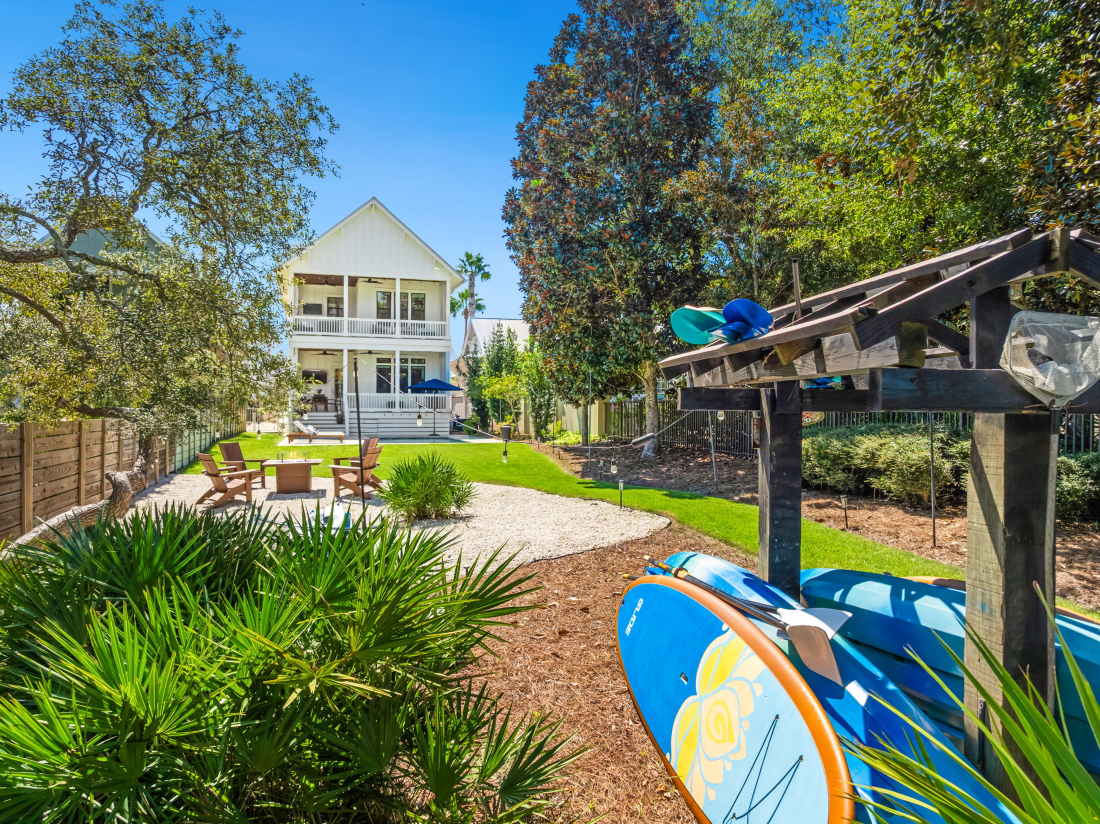
One of Freeman’s current listings, 11 Dulce Lane in Inlet Beach, shows how a distinctive setting can help a rental stand out. The home sits on Lake Powell, the largest coastal dune lake in Florida, with a saltwater pool, a fire pit, and a private dock, while the Gulf beaches are a short drive away. It’s offered fully furnished, and a deck boat, kayaks, and paddleboards convey with the home.
“Most rentals on 30A compete on the beach alone,” Freeman said. “A lakefront home gives guests a second kind of vacation right in the backyard, paddleboarding in the morning and sunset on the dock, with the Gulf still close by. That’s the kind of stay people remember.”
The lake may also give the home an edge beyond summer. When the Gulf turns cooler, mornings on Lake Powell, an afternoon on the boat, and evenings around the fire pit give guests plenty to do without leaving the property. Whether that appeal translates into rental income still depends on the numbers.
Balancing Personal Use and Rental Income
Many 30A investors want both a home that earns money and a place to bring their own people. Freeman says the two can coexist, as long as the plan is set before closing.
“The weeks you’d most like to be here are usually the weeks that earn the most,” Freeman said.
“Some owners keep the Fourth of July for themselves and accept that tradeoff. Others save their stays for fall, when the weather is beautiful and the rates are lower. There’s no wrong answer, as long as you decide before you buy.”
Self-Managing vs. Hiring a Local Management Company
After closing, every 30A rental owner faces the same decision: run the home themselves or hire a vacation rental management company. Both can work, and each comes with tradeoffs.
Self-managing. You keep the management commission, control pricing and house rules, build direct relationships with guests, and see firsthand how the home is being cared for. Being hands-on may help an owner meet the IRS standard for material participation, which can affect tax treatment; a CPA can say whether that applies.
But it’s a real job. Guest messages come at all hours, and same-day turnovers mean coordinating cleaners, linens, and maintenance on a tight schedule. Owners are responsible for registration, applicable tax filings, and keeping listings and pricing current. Those who live out of town need a dependable local team.
Hiring a management company. Established companies bring marketing reach, pricing tools, and repeat guests, while handling housekeeping, maintenance, inspections, and guest support. Many also handle lodging tax collection and remittance, subject to the contract.
The commission and added fees reduce net income, and owners give up some control over pricing, marketing, and owner stays. Service quality varies, as do contract terms, including how an agreement can be ended.
“The right answer depends on how close you live, how much time you have, and how hands-on you want to be,” Freeman said. “If you live in Atlanta and work full time, self-managing can turn a lifestyle investment into a second job. As an owner, I’ve learned what to look for, and I can introduce buyers to well-regarded local companies so they can compare before they decide.”
If you go the professional route, Freeman suggests asking what fees apply beyond the commission, how rates are set, how owner stays are handled, what repairs managers can approve, what reporting you’ll receive, and how the contract can be ended.
Why Local Expertise Matters for 30A Investors

Holding a real estate license is not the same as knowing a market, and on 30A the difference shows up quickly. Homes a few streets apart can carry different rental rules, different guest appeal, and very different long-term value.
For investors, local knowledge can mean sharper questions, better comparisons, and fewer surprises. Understanding current rules and how nearby properties actually operate matters more than relying on a listing alone.
“An investment property has to make sense on paper and on the ground,” Freeman said. “Being here every day, I can help investors understand how different neighborhoods tend to rent, where to look for current rental rules, and what questions to ask before they buy. Markets and rules change over time, so my role is to help people make an informed decision, not to promise an outcome.”
Frequently Asked Questions About 30A Investment Properties
Can you rent out a home on 30A? In much of Walton County, yes, subject to applicable registration, licensing, and tax requirements. HOA rules can be stricter, and some communities restrict or prohibit short-term rentals. Read the covenants and bylaws before making an offer.
Does a 30A rental need a Gulf view to perform well? No. Easy beach access, a location where guests can walk, bike, or take a golf cart to the beach and town, a pool, and space for groups often matter as much as a view.
What should I look for in a 30A vacation rental? Confirm rental rules first, then look at net income after expenses, beach access, sleeping space for groups, a pool, memorable outdoor features, and turnkey condition.
How do taxes factor into owning a 30A vacation rental? Short-term rentals can be treated differently from long-term rentals or second homes. A CPA who specializes in short-term rentals can explain what applies to your situation.
Should I self-manage my 30A rental or hire a management company? Self-managing saves the commission and offers more control but takes time. A local management company handles guests, cleaning, and maintenance for a fee. Compare several companies before deciding.
Allison Freeman is a 30A real estate agent with Christie’s International Real Estate Emerald Coast who works with buyers, sellers, and investors across Scenic Highway 30A.




 Hey30A AI


 A bird’s-eye view of 11 Dulce Lane on Lake Powell in Inlet Beach. More glimpses of this lakeside property and its surroundings appear throughout the article.